SECTION 03 // PHYSICS CORE
Six equations. Real science.
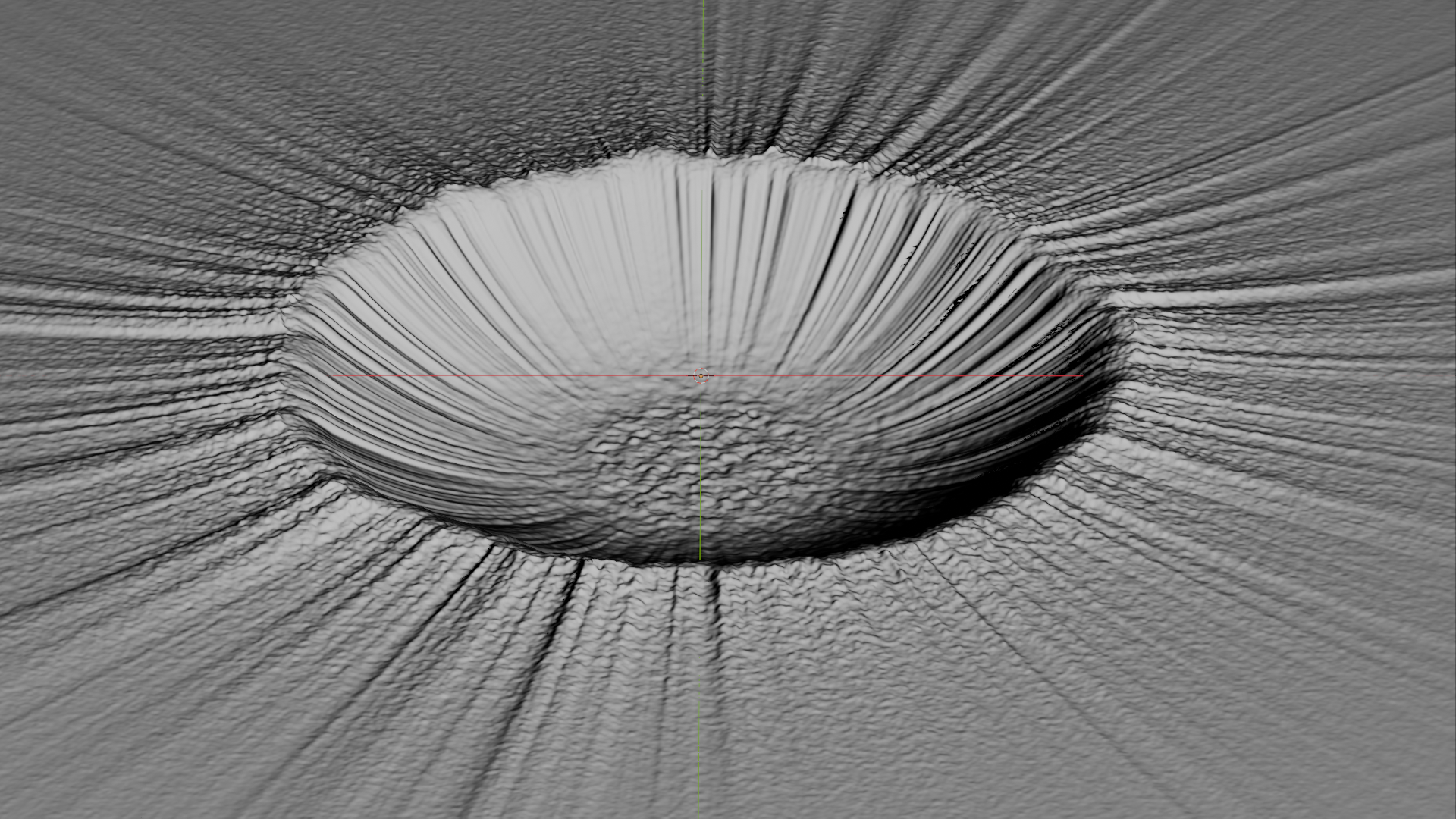
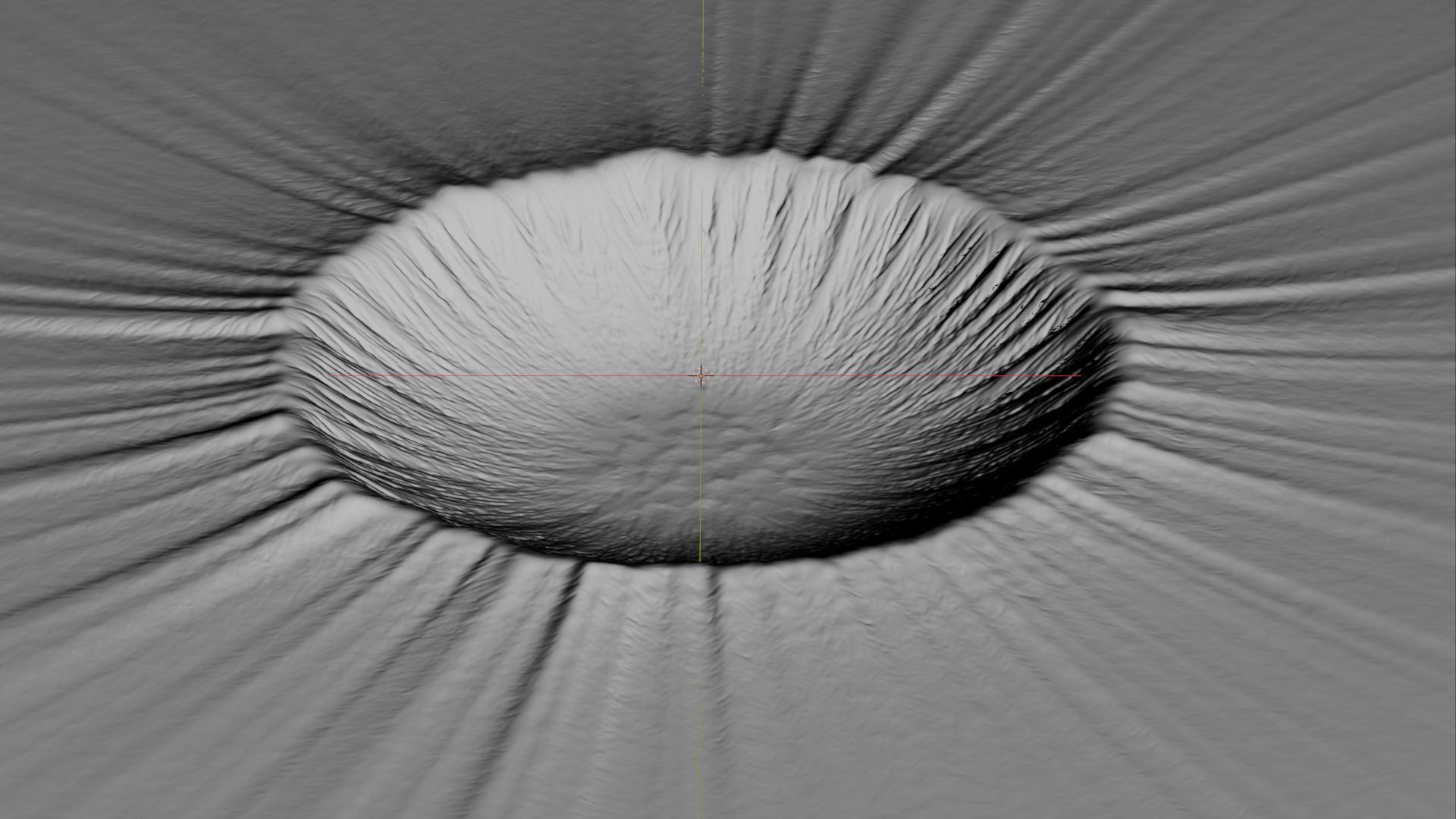
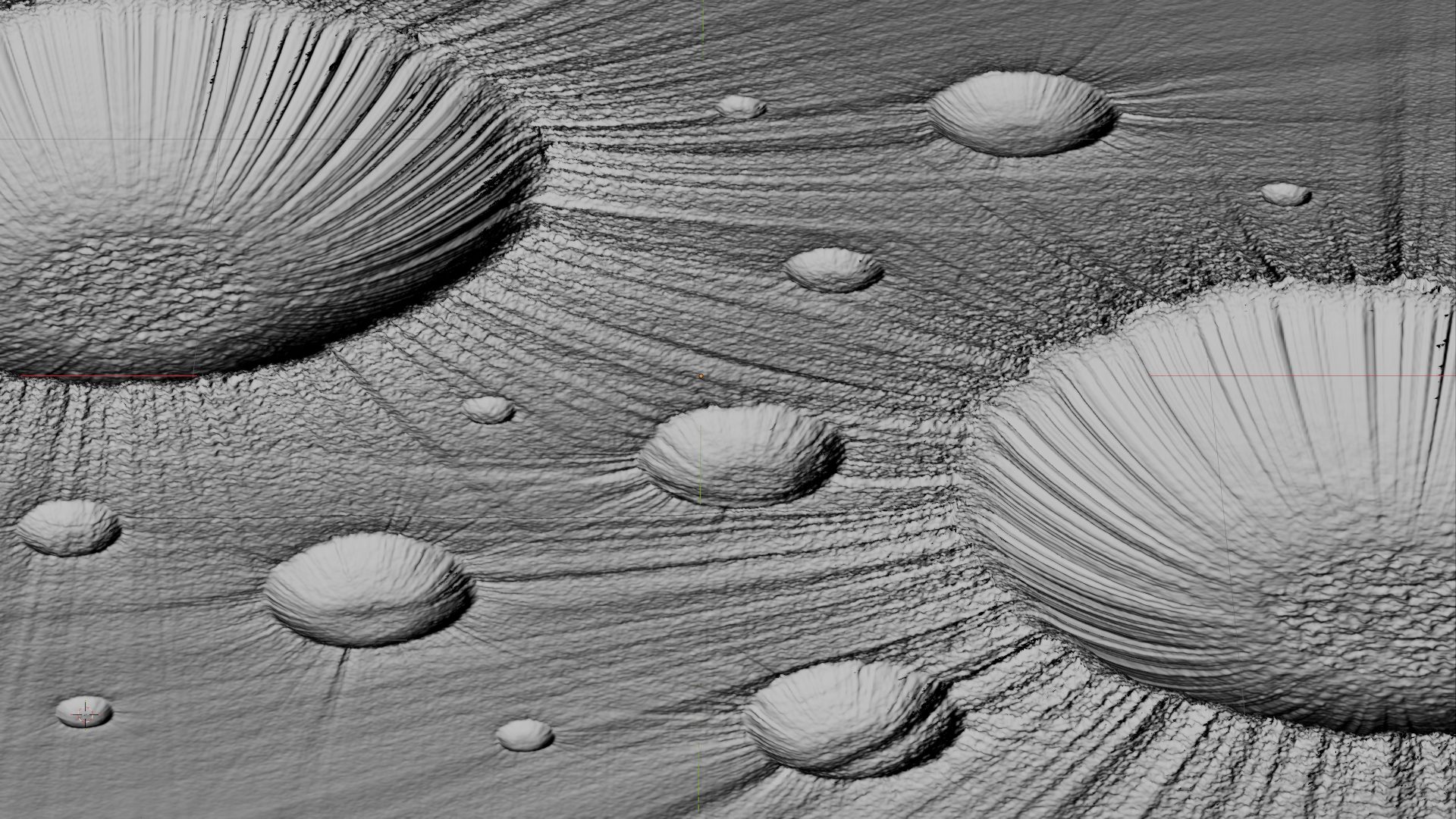
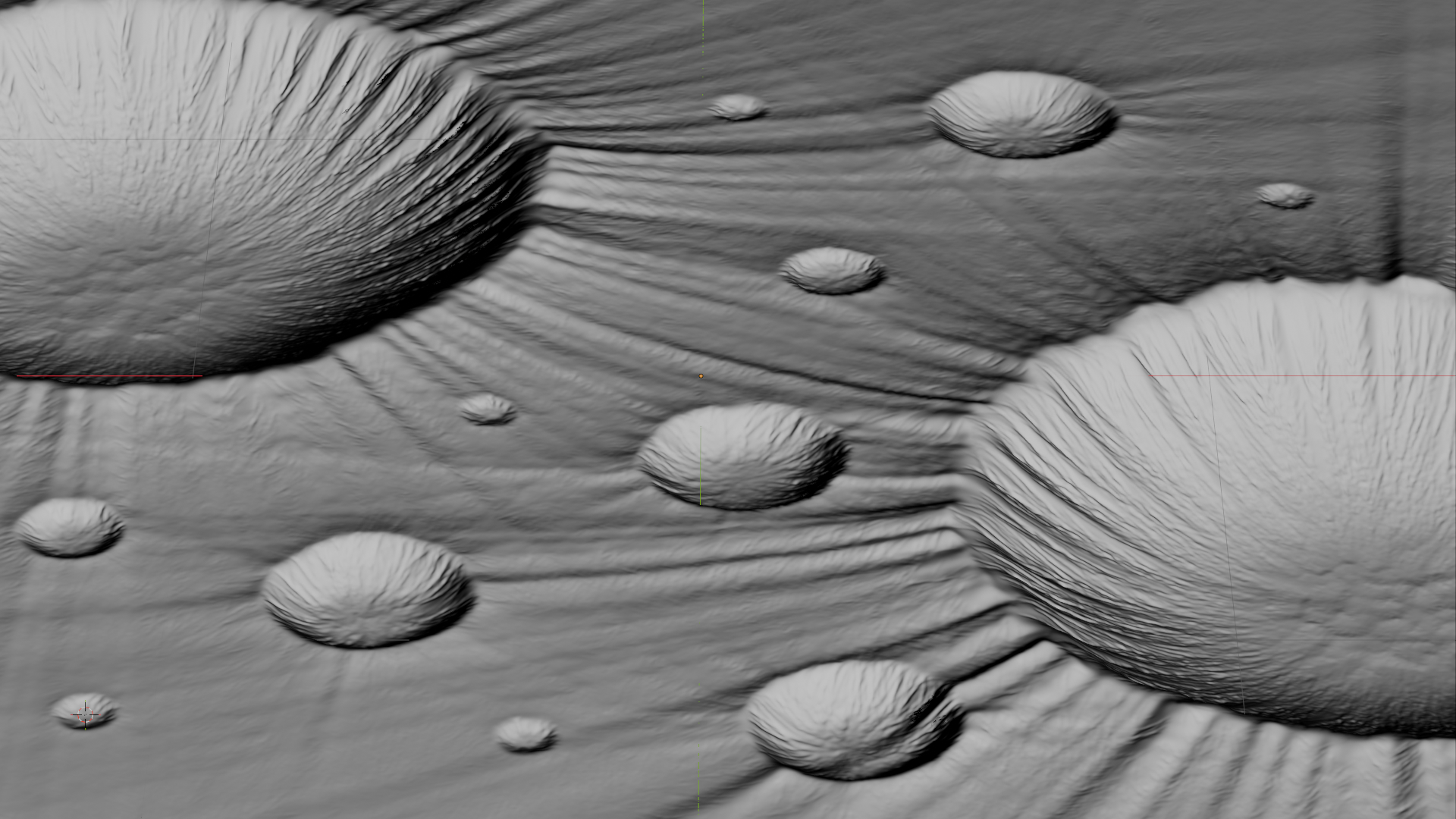
Crater Generator is not a displacement-texture preset. Every equation below runs in a compute shader, in production, for every crater you generate. References to Schmidt-Holsapple, McGetchin, O'Callaghan & Mark, Beyer 2015 and Musgrave 1989.
// EQ.01 · IMPACT
Schmidt-Holsapple Scaling
D = K₁ · (g·a/v²)^μ · (ρₜ/ρₚ)^ν · 2a
Crater diameter from projectile radius, velocity and target/projectile density ratio. Calibrated against laboratory impact experiments and nuclear test data.
// Schmidt & Holsapple · Pi-group scaling
// EQ.02 · IMPACT
McGetchin Ejecta
t(r) = peak · (r / rₚₑₐₖ)⁻³
Power-law decay of ejecta thickness with radial distance from the rim. Reproduces the natural fall-off observed on lunar and Martian craters.
// McGetchin et al. 1973
// EQ.03 · IMPACT
Verlet Trajectory
x(t+dt) = x + v·dt + ½·a·dt²
Symplectic integration of the meteor's atmospheric descent with quadratic drag — accurate trajectory for impact angle and contact-frame computation.
// Verlet 1967 · classical molecular dynamics
// EQ.04 · EROSION
Stream Power Law
∂z/∂t = −K · A^m · S^n
Erosion rate proportional to drainage area and slope. Drives the dendritic channel network through D8 flow accumulation across the heightfield.
// O'Callaghan & Mark 1984
// EQ.05 · EROSION
Beyer Particle Hydraulics
v ← v · inertia − ∇h · (1 − inertia)
Each water droplet integrates momentum + gradient descent, carries sediment up to capacity, deposits where slope drops. Tens of thousands of particles per second on the GPU.
// Beyer 2015 · TU München thesis
// EQ.06 · EROSION
Thermal Erosion (Talus)
loss = rate · max(slope − talus, 0)
Material above the talus angle slumps to neighbours. Prevents unrealistic vertical walls and produces natural slope-stable terrain.
// Musgrave et al. 1989
 // I.001
 // I.002
 // I.003
 // I.004